

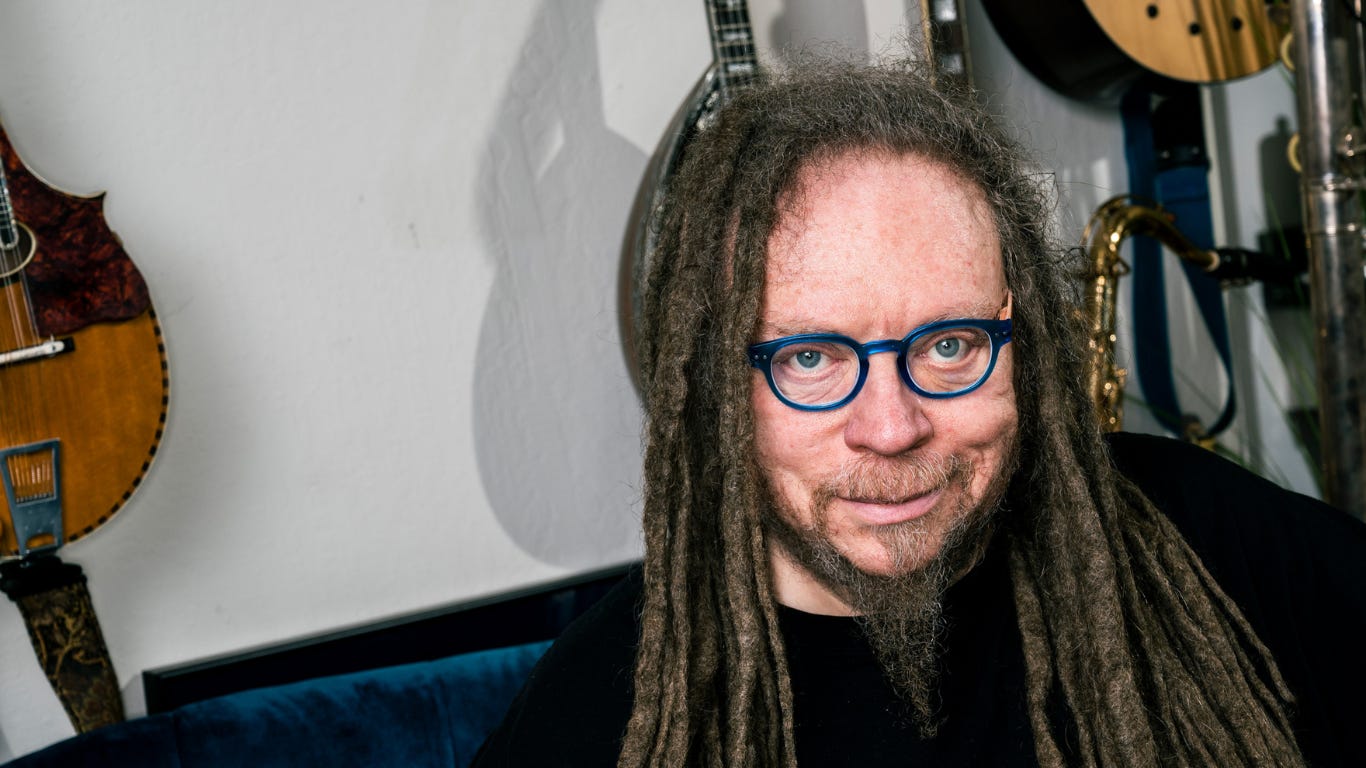
Jaron Lanier
The Atlantic published on Saturday an article authored by assistant editor Elias Wachtel about how Catholics are not only intervening, but are being welcomed in the process of shaping the expansion and implementation of Generative AI
The article -behind a paywall- is worth reading, among other things, because it does justice to the varying opinions among Catholics about the promises and dangers of AI.
But in summary, it shows that Silicon Valley is turning to Catholic thinkers not because tech executives have suddenly become religious, but because AI is forcing questions that engineering alone cannot answer: What is a human person? What should never be automated? What does dignity require? The article’s central point is that some of the most influential people in AI now see the Church as one of the few institutions still capable of speaking coherently about those questions.
That article picks up the role of Fr. Brandon McGuire, whose story I shared here, and matters because Catholic thought is not being treated merely as ornament. It is shaping conversations inside the AI world, especially around human dignity, embodiment, moral limits, and the danger of reducing the person to intelligence, utility, or code. The interest is practical as much as philosophical: technologists are looking for a moral grammar sturdy enough to resist the dehumanizing tendencies of their own industry.
To me, the most striking part of the article was to read Jaron Lanier’s judgment. Lanier is not some marginal outsider. He is one of the most important figures in modern computing: a pioneering computer scientist, a leading early architect of virtual reality, and the person widely credited with popularizing the term “virtual reality.”
When someone of that stature -and a professed non-religious person- says, after a Vatican AI conference, that the Catholic view of the human person is “vastly, vastly, vastly more sane and reasonable” than that of many in Silicon Valley, it is not a sentimental compliment. It is an indictment. It means that in a field intoxicated by power, speed, and abstraction, Catholic anthropology may still be one of the few sane languages left.
Muy interesante, Alejandro.
Una nueva muestra de que el progreso científico y tecnológico, tan útil y necesario, no puede dar respuestas a muchas de las preguntas más profundas que nos hacemos los humanos.
Para eso hace falta una filosofía y una visión de la vida absolutamente articulada y fundamentada. Y si es una que lleva 2.000 años dando sentido a la existencia, pues mejor.
No en vano, la mayoría de lo que hemos construido en occidente y nuestro concepto de lo que es o no una persona es fruto de ese árbol cristiano que muchos intentan talar, mientras están sentados bien alto en sus ramas.