

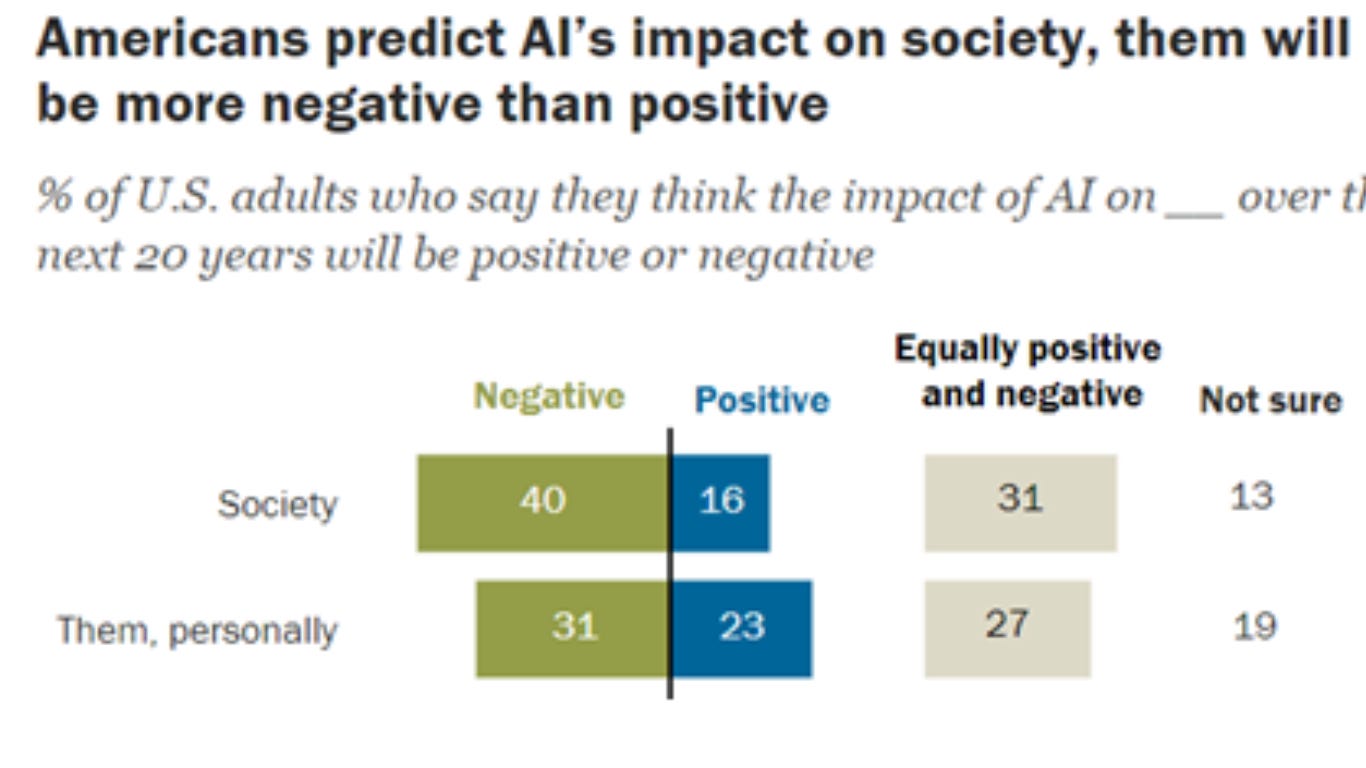
The latest Pew research about Americans and AI captures something deeply revealing about the American encounter with artificial intelligence: people are using it more and more, even as they remain uneasy, skeptical, and often fearful about where it is leading. About half of U.S. adults now say they use AI chatbots, up from a third in 2024, and roughly one in four say they use them daily. Americans are using these tools for search, for work, for entertainment, for health questions, and even, in a smaller but still sobering number of cases, for emotional support. And yet at the same time, majorities say AI is advancing too quickly, puts personal information at risk, and is more likely to harm than help society.
That paradox should not surprise Christians. Human beings often embrace a technology long before they have morally digested it. Convenience arrives first; wisdom usually limps behind. We use the thing because it is useful, because it saves time, because it simplifies tasks, because everyone else is starting to rely on it. Only later do we begin to reckon seriously with what it is doing to our habits, our relationships, our labor, our imagination, and our understanding of what it means to be human. AI is proving no exception. Americans are already weaving it into ordinary life even while suspecting, often correctly, that they do not yet fully understand the consequences.
From a Catholic perspective, this is exactly the kind of moment that calls for prudence in the deepest Thomistic sense. For St. Thomas Aquinas, prudence is right reason applied to action: the habit of seeing reality clearly, judging rightly about what is to be done, and choosing fitting means to a good end. It is the guide of the moral life because it helps direct all the other virtues toward concrete action in the real world. AI places that virtue under enormous pressure.
Why? Because some moral lines are clear enough. We should not cheat or deceive others about authorship or hand over intimate human relationships to machines. We should not allow efficiency alone to determine the shape of education, medicine, journalism, or family life.
But many other questions are much harder. When does assistance become dependency? When does efficiency become dehumanization? When does convenience begin to corrode the habits that make freedom possible? These are prudential questions. And they cannot be answered by slogans alone.
Pew’s findings show that Americans are already living inside that tension. They are using AI for work and search because it is obviously helpful, but they remain worried about its impact on their lives and on society because they sense, however imperfectly, that usefulness is not the same as goodness.
That intuition should be taken seriously. It means that what is needed now is not technophilia or technophobia, but prudence: a trained moral intelligence able to distinguish between what may be used, what must be limited, and what should be refused.
Prudence directs fortitude so that we have the courage to resist what should not be normalized; and directs charity so that the human person remains at the center of every technological choice.
That is the real challenge of the AI age. Not merely whether we can build astonishing tools, but whether we still possess the practical wisdom to govern them well. The Catholic tradition has a name for the virtue that can navigate exactly that condition. It is prudence. And we are going to need a great deal of it.