

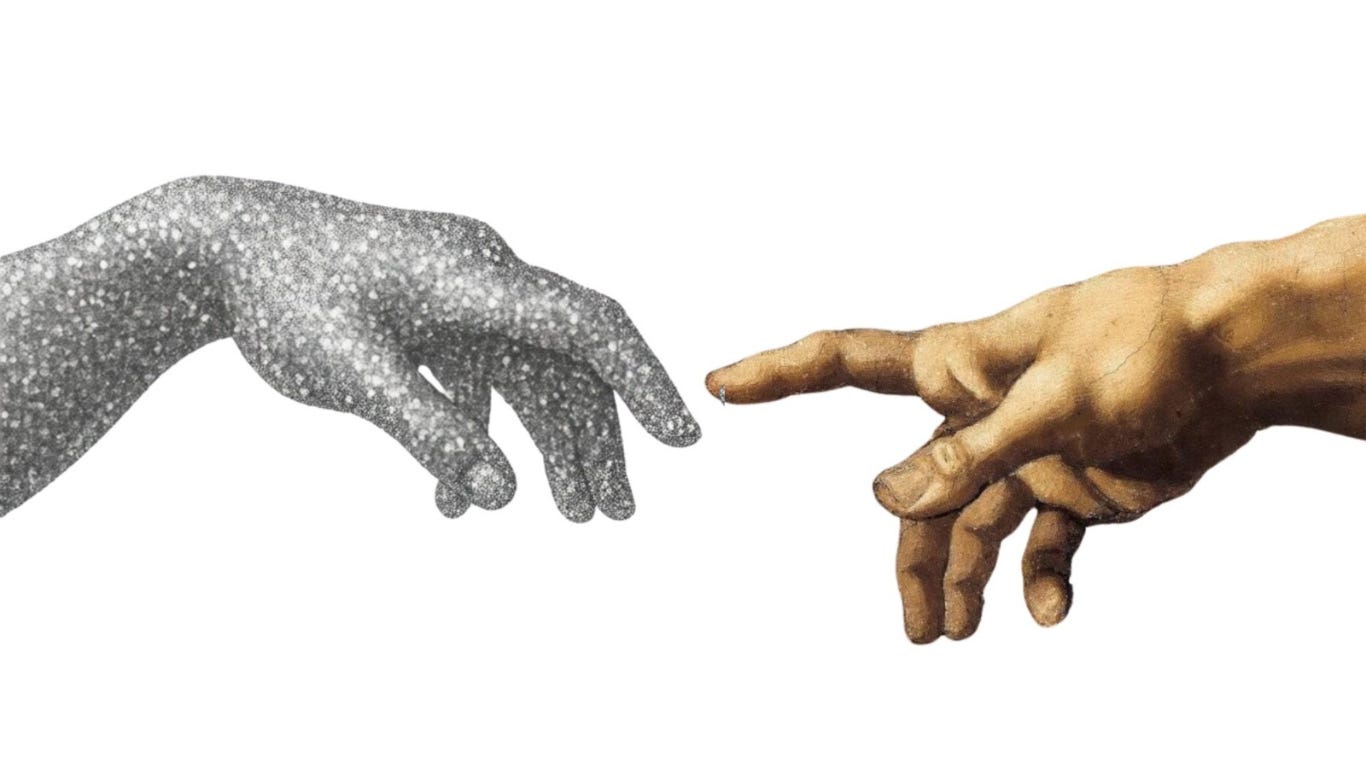
I have lived through every major wave of digital technology — not as an observer, but as someone who built things with his hands, in real places, with real communities. From the early days of HTML in a newsroom in Lima, to mobile-first design in Erbil, to AI-powered personalization today, I have watched technology arrive, disrupt, and reshape how people find meaning, connection, and truth.
Every one of those waves felt significant. None of them felt like this.
What we are living through with Artificial Intelligence is not another upgrade. It is not the internet getting faster, or social media getting smarter, or search getting more precise. Those were evolutionary changes — important, often disruptive, but changes that left the fundamental architecture of human agency intact. You could still choose whether to engage. You could still, more or less, understand what was happening to you.
AI is different. It is the first technology that does not just carry human thought — it begins to “replicate” it. As the only being created to the image (Imago) and likeness of God, human intelligence will never be completely replicated.
But that doesn’t change the fact that today’s attempts seem to be succeeding in creating “the next best thing.”
That is a revolutionary change, in the precise sense of the word: it does not build on the old order, it overturns it. And revolutions, history reminds us, can go in more than one direction.
I have sat in a refugee camp in South Sudan and understood, in a way that no report or statistic could convey, that the distance between a life of dignity and a life of desperation is often nothing more than access: access to food, to information, to tools that work for you rather than against you. I have seen what happens when powerful technology reaches the forgotten. I have seen what happens when it doesn’t.
That experience is why I cannot approach AI as either a cheerleader or a pessimist. I am Catholic. That defines my life. But I am not a theologian or a philosopher. So I will speaking, mostly trying to provoke though rather than define it.
This space, therefore, exists because I believe the future of AI will not be decided solely in laboratories or boardrooms. It will be shaped -for better or worse- by the quality of the ideas circulating in public. Grounded ideas. Ideas forged in contact with real human experience, across cultures and languages and conditions that most technology builders have never encountered.
I have worked across four continents and four languages, and I am currently immersing myself in the art of AI prompt engineering; because I believe that understanding these tools from the inside is the only honest way to think about them. And as someone who has spent a lifetime at the intersection of faith, culture, technology, and human dignity, I believe such perspective belongs in this conversation.
Thank you for being here.