

One of the most important things anyone can say about AI right now is also one of the simplest: the future is not written.
That is the core wisdom in Anton Leicht and Dean Ball’s essay. They argue that we do not actually know, in any settled way, what AI will do to human labor. We can tell two stories at once. One is bleak: AI hollows out work, concentrates wealth, and leaves millions of people displaced. The other is more hopeful: just as previous technological revolutions created forms of work human beings could not previously imagine, this one may also open new possibilities for human action, value, and service. Their point is not that optimism is guaranteed. It is that certainty, in either direction, is dishonest.
That matters because too much of the AI debate swings between prophecy and despair. Leicht and Ball insist that policy choices, incentives, institutions, and experiments will help shape what actually happens. In other words, the future of work under AI is not merely something we wait to discover. It is something, at least in part, that human beings will make. That is why they warn against freezing the labor market in place or assuming that the only alternatives are total surrender or total prohibition. They argue instead for betting on human agency, human adaptability, and the distributed creativity of millions of people trying new things.
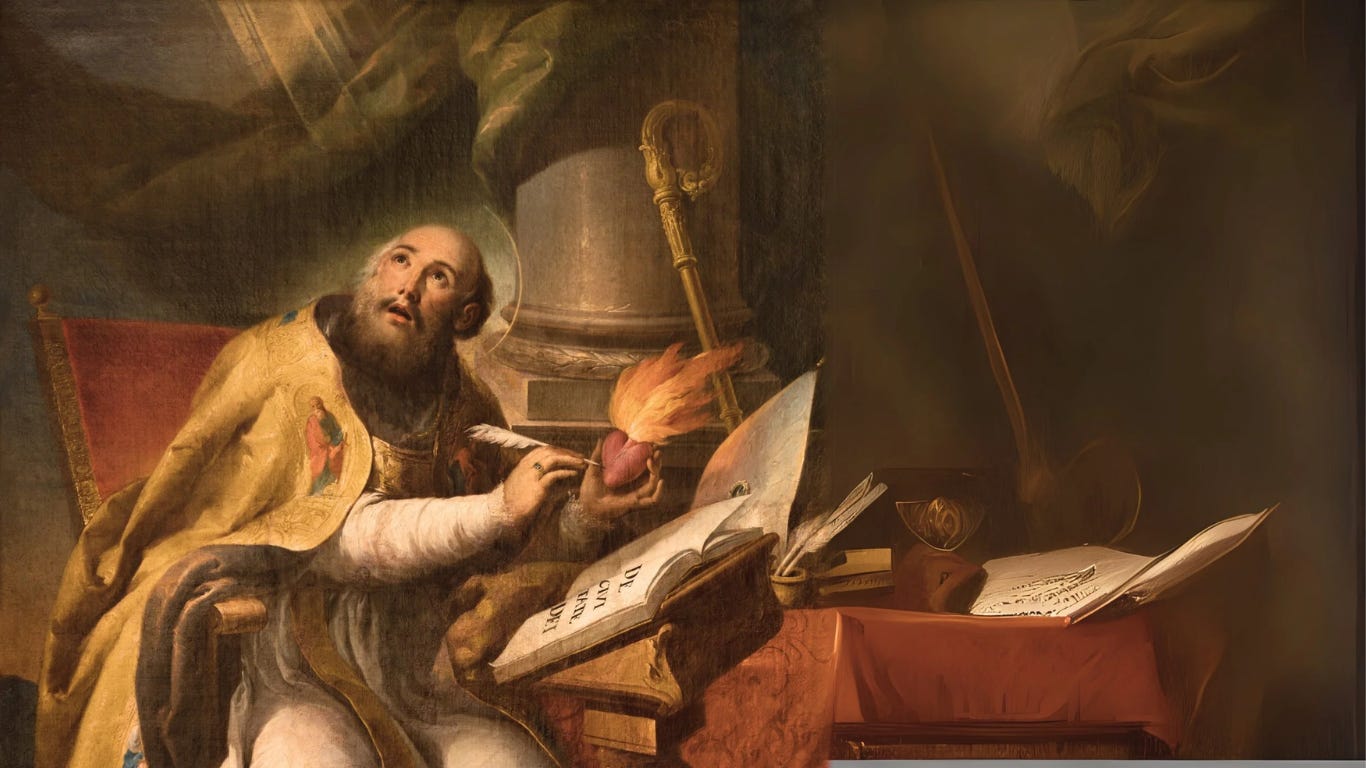
From a Catholic perspective, this is exactly the right instinct. It is, in a deep sense, the Augustinian instinct. St. Augustine famously said, “We are the times.” He meant that history is not an impersonal force rolling over us while we stand outside it. The moral and spiritual condition of an age depends, in no small part, on the kind of people we are and the choices we make within it. That is why the ultimate Catholic position on AI cannot be fatalism. Christians are not permitted to look at the future as if it were a closed script written by machines, markets, or technocrats. We are actors inside history, not spectators of it.
This does not mean naïveté. Leicht and Ball are clear that serious disruption may come, and that nobody knows in what proportion pain and renewal will be mixed. A Catholic view should say the same, only more sharply: sin is real, power corrupts, and technological systems can easily be turned against the vulnerable. But that realism is not the same thing as resignation. On the contrary, Christian realism should make us more determined to act, because it knows both how much can go wrong and how much depends on whether human beings exercise prudence, courage, and creativity.
So the deepest value of their essay is that it resists the false piety of inevitability. It refuses to bow before “what’s coming” as if man were only raw material for the next system. That refusal is profoundly Catholic. We are not called to deny the scale of the technological upheaval. We are called to shape it. We are the times. And if that is true, then the question is not only what AI will become. It is what kind of people we will be while it does.