

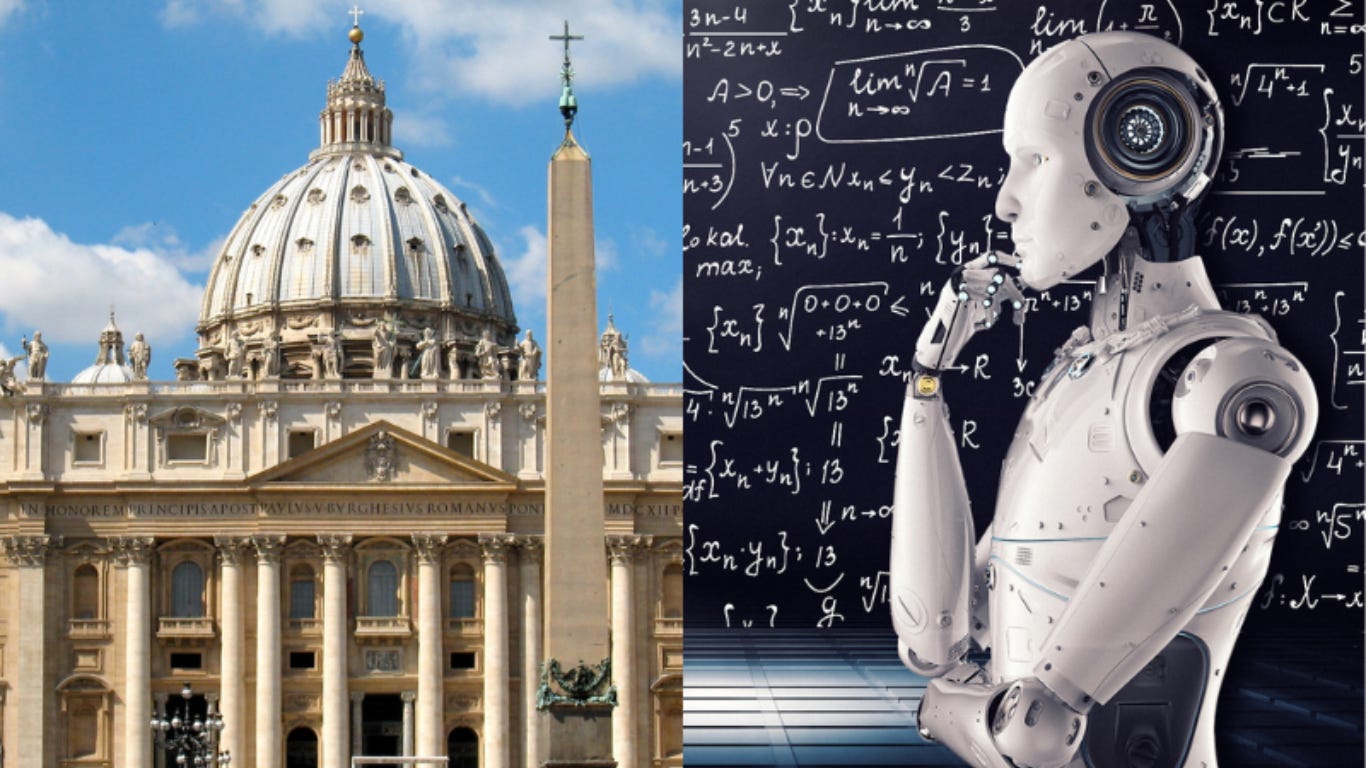
For Catholics who want to contribute to the shaping of artificial intelligence, one point is absolutely crucial: our contribution cannot remain trapped at the level of abstraction. It is not enough to offer grand principles, beautiful theological language, or elegant warnings from the sidelines. If Catholic thought is to matter in the age of AI, it must become practical, applicable, and relevant to the actual systems, incentives, institutions, and decisions that are now shaping the technology in real time.
That is why John McCarthy’s warning still lands with force. McCarthy, who did as much as anyone to define the field itself, and coined the term “Artificial Intelligence” understood that a “philosophy” of AI could easily become an academic exercise detached from the real trajectory of the technology. As he wrote in a short, memorable essay:
“One can expect there to be an academic subject called the philosophy of artificial intelligence analogous to the existing fields of philosophy of physics and philosophy of biology. By analogy it will be a philosophical study of the research methods of AI and will propose to clarify philosophical problems raised. I suppose it will take up the methodological issues raised by Hubert Dreyfus and John Searle, even the idea that intelligence requires that the system be made of meat. Presumably some philosophers of AI will do battle with the idea that AI is impossible (Dreyfus), that it is immoral (Weizenbaum) and that the very concept is incoherent (Searle). It is unlikely to have any more effect on the practice of AI research than philosophy of science generally has on the practice of science.”
That is a bracing point, and Catholics should take it seriously. If our reflection on AI does not descend into the concrete world of policy, product design, labor, education, governance, incentives, and institutional responsibility, then it risks becoming pious commentary with no real effect on the systems that will shape human lives.
Catholic principles remain indispensable precisely because they defend truths the AI age is tempted to forget: that the human person is not reducible to data, that efficiency is not the highest good, that work must serve the person and not consume him, and that technological power must be ordered to the common good. But those principles will only shape the future if Catholics learn how to translate them into arguments, frameworks, and proposals that serious builders, executives, lawmakers, and educators cannot simply ignore.
In other words, the Church does not only need a theology of AI. It needs engaging practical proposals.
El artículo tiene razón al subrayar que la contribución católica a la IA debe partir de una antropología teológica fuerte, la persona no es un algoritmo, sino sujeto de libertad, responsabilidad moral y comunión. La Eucaristía y el ministerio pastoral, por tanto, se resisten a cualquier automatización, porque son gestos encarnados de presencia y don. La IA puede acompañar, pero no sustituir ni colonizar la gracia ni la conciencia, y debe diseñarse siempre al servicio del bien común y de la comunidad eclesial. Gracias