

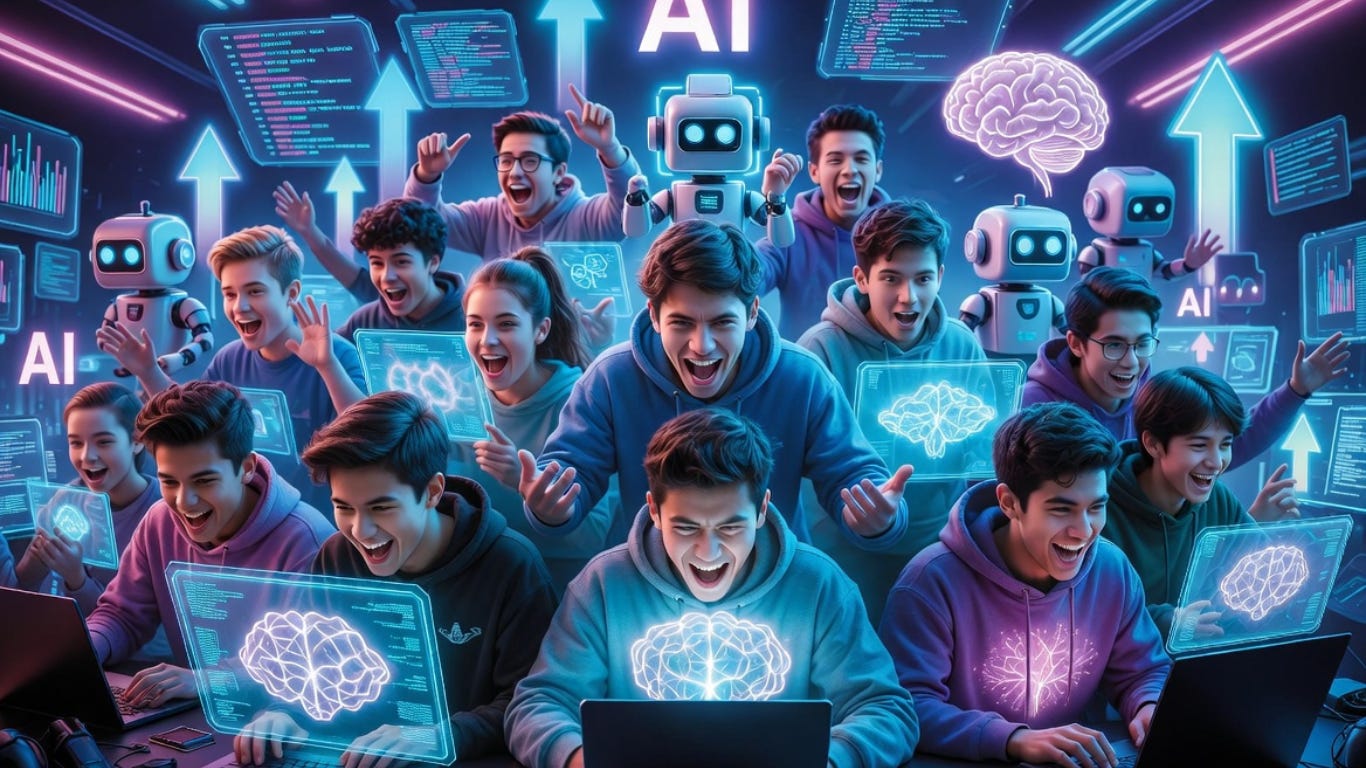
Tyler Cowen calls them “AI maniacs.” I might more casually call them the “AI Bros”: the young, energetic, often self-taught obsessives who test every new model, reorganize their work around AI agents, and imagine possibilities that most institutions have not yet begun to understand.
Cowen is probably right that these people will exercise disproportionate influence over the next stage of the AI revolution. They are already using AI to create remarkably small companies, automate complicated workflows, bypass traditional credentials, and compete against large organizations burdened by bureaucracy and legacy costs.
Some may make extraordinary contributions to medicine, science, education, and entrepreneurship. Others may discover dangerous uses for systems whose capabilities are advancing faster than governments or corporations can control.
From a Catholic perspective, the risks are obvious.
Obsession can become idolatry. A person who cancels a date to spend more time experimenting with a new model may be an amusing anecdote, but it also symbolizes a deeper disorder: the subordination of human relationships to technological fascination.
Cowen describes people inserting chatbots into group conversations as though the machine were another member of the group, capable of settling disputes by delivering “the actual truth.” But AI is not an oracle, much less a person. Treating it as either risks weakening conversation, judgment, friendship, and the humility required to live with uncertainty.
There is also the temptation of pride. AI gives talented individuals powers that once required entire teams, institutions, or governments. A single technically proficient person may soon be able to launch companies, manipulate information, identify security vulnerabilities, or influence millions. That concentration of practical power in people who are often young, self-appointed, and institutionally unaccountable should concern us. Energy and intelligence are virtues, but they are not substitutes for wisdom, conscience, or moral formation.
Yet the rise of the AI Bros is not only a danger. It is also an extraordinary evangelization opportunity.
Cowen describes them as hopeful, courageous, skeptical of status, willing to learn independently, and capable of imagining a future radically different from the present. Many are immigrants or outsiders who do not expect established institutions to open doors for them. They believe that disciplined effort and new tools can overcome barriers that once seemed permanent. There is something admirable—and profoundly human—in that hunger to create.
In short, they are people the Church should seek out.
In many respects, the AI world is a new missionary territory. Its inhabitants possess immense technical confidence but often lack an adequate language for human dignity, moral responsibility, suffering, sacrifice, and the common good. They may dream of curing disease or democratizing entrepreneurship, while remaining vulnerable to loneliness, narcissism, and the fantasy that intelligence alone can save humanity.
The Catholic contribution must therefore be both affirming and disruptive. The Church can affirm their creativity, courage, and desire to build. Christianity does not fear human ingenuity; it understands creativity as one expression of the image of God. But it must also disrupt the technological mythology that confuses making with creating, intelligence with wisdom, power with authority, and innovation with progress.
Cowen’s final admonition to the AI bros is important: “May you take your new responsibilities seriously.” Catholics should say amen… and then explain what responsibility actually means.
The AI Bros are already trying to build the future. The evangelization question is whether anyone will help them understand what the future -and the human person- is ultimately for.