

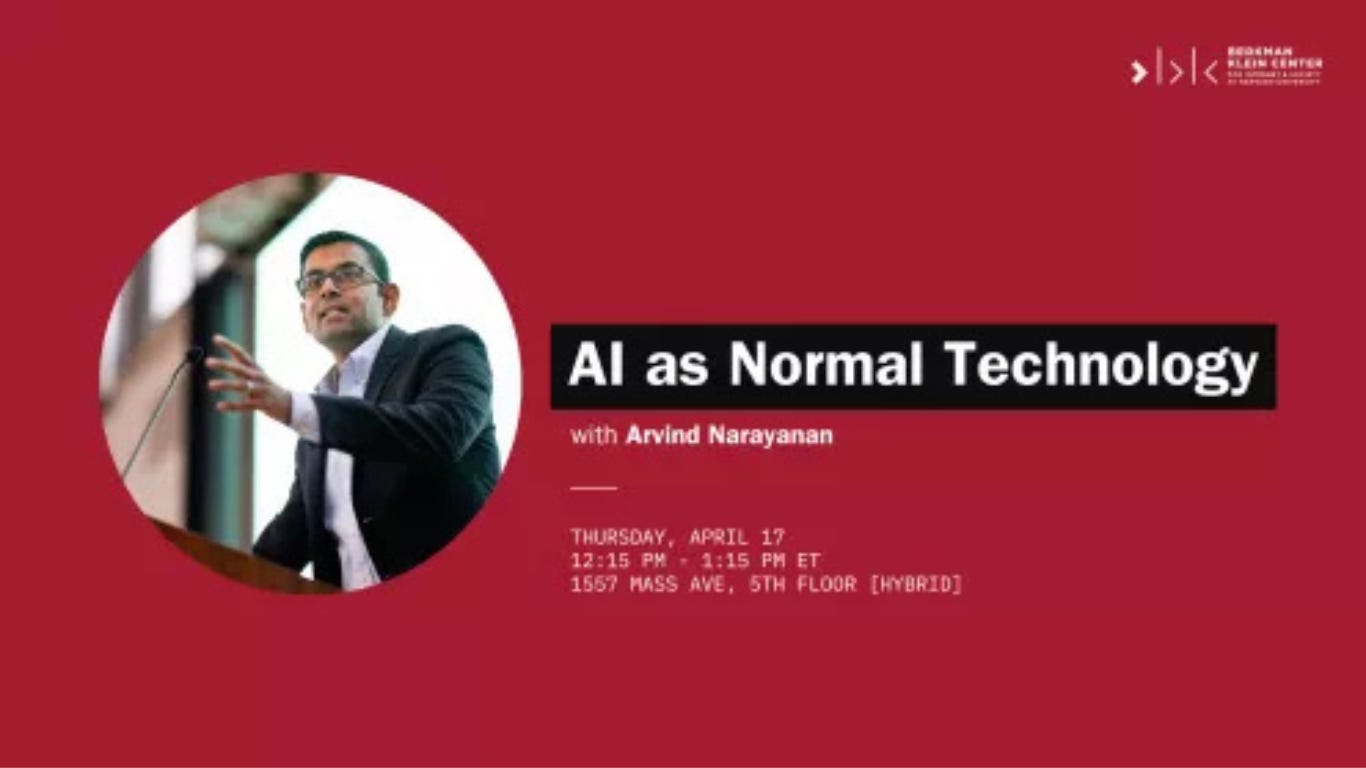
In a quite enlightening post, Derek Thompson’s basic point is that the deepest disagreement in the AI debate may be simpler than it looks: is AI a “normal” technology, or is it something historically unprecedented?
Drawing on Arvind Narayanan and Sayash Kapoor, he lays out the “normal technology” case: like electricity, the car, or the internet, AI may bring bubbles, monopolies, labor disruption, safety chaos, and regulatory catch-up without bringing civilizational collapse. Thompson notes that, so far, some evidence fits that view: several years after ChatGPT’s debut, growth and employment data still do not show the total social rupture many predicted, and even occupations once thought highly vulnerable have not vanished.
But Thompson does not stop there. He frames the real split as a clash between those who think AI will remain within the historical pattern of past technologies and those who believe it may cross into something radically different, especially if systems begin recursively improving themselves.
That is why the argument over whether AI is “normal” is not semantic at all. It shapes how people think about labor, regulation, national security, and even whether existing political institutions are adequate to govern what is coming.
From a Catholic perspective, that is exactly the right question to ask, though not in quite the same terms. The point is not merely whether AI is normal in the history of technology. The point is whether our response to it remains normal in the history of humanity.
Catholics should resist both cheap panic and cheap reassurance. If AI is “normal,” then it still requires moral discipline, political prudence, and a serious defense of workers, families, and the common good. And if it is not normal—if it is truly a threshold technology—then all the more reason to reject the lazy assumption that market incentives and technical elites will sort it out on their own.
So the value of Thompson’s post is that it clarifies the debate beneath the debate. The real fight is not just over capabilities, forecasts, or timelines. It is over analogy. Are we dealing with another electricity, or with something closer to a rupture in the human story? Catholics should be prepared for either possibility, but in both cases the task is the same: to insist that no technology, however “normal” or extraordinary, should be allowed to redefine the human person in its own image.