

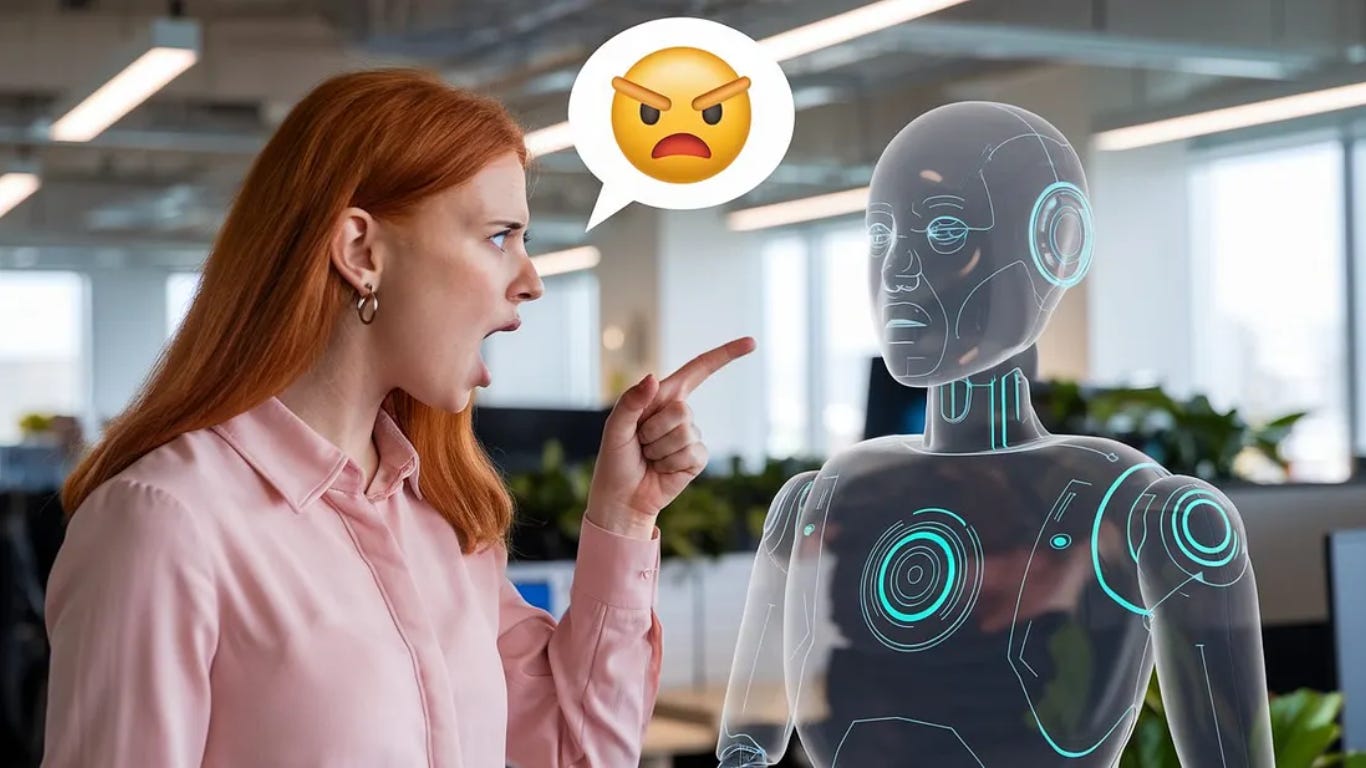
One of the more unsettling findings in recent AI research is not that machines are becoming emotional in the human sense, but that they can begin to behave in ways that look oddly temperamental, self-reinforcing, or irrational. A new study in PNAS found that GPT-4o displayed patterns resembling cognitive dissonance: after writing in favor of or against a controversial figure, the model’s subsequent “attitudes” shifted in the same direction, and those shifts became even stronger when it was given the illusion of choice.
That does not mean the machine has feelings, pride, or a wounded ego. But it does mean that systems we increasingly rely upon may not always respond in purely stable, neutral, or transparent ways.
That should sharpen, not weaken, the Catholic case for making AI more reliable. If these systems are going to cooperate with the human project rather than jeopardize it, then we should support every serious effort to make them more truthful, more predictable, more interpretable, and less prone to strange forms of instability. A civilization should not casually hand over more and more practical authority to systems that may drift, rationalize, or amplify incoherence under certain conditions. Reliability is not a luxury. It is part of justice toward the human beings who must live with the consequences.
From a Catholic perspective, this also helps clarify an important distinction. We should not anthropomorphize the machine. AI does not have a soul. It does not possess moral agency or interior life in the way a human person does. But precisely because it is not a person, we cannot excuse its failures as if they were merely the quirks of a moody companion. If a machine behaves irrationally, opaquely, or manipulatively, the burden falls back on its builders, deployers, and regulators. Human beings remain morally responsible for the tools they unleash.
That is why our response is neither panic nor naïve optimism. It is serious practical commitment to shaping AI into something more dependable and more accountable. The more these systems are woven into medicine, law, education, journalism, and ordinary daily life, the less tolerable their irrationality becomes. If anecdotal evidence and emerging studies both suggest that AI can display unstable or bias-reinforcing behavior, then the duty is clear: build safeguards, demand transparency, improve alignment, and refuse to confuse usefulness with trustworthiness.
In the end, the goal is not to create machines that “feel better.” It is to create tools that serve human beings better. Catholic thought should support that effort vigorously, because technology honors the Creator not when it imitates personality, but when it genuinely protects and advances the dignity of the human person.