

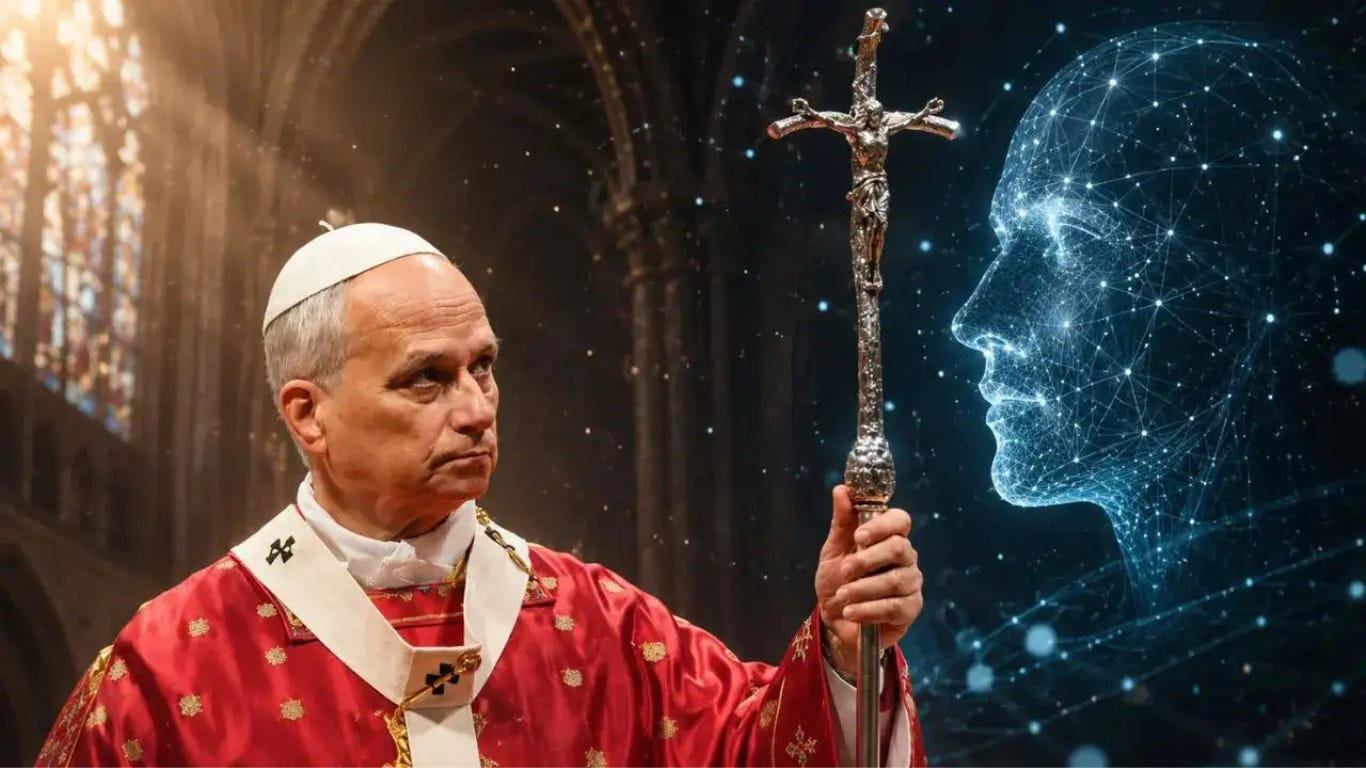
An Axios report highlights an irony that should interest Catholics very much: even as AI tools spread into churches, prayer apps, sermon preparation, and moral reflection, the machines themselves still show a marked tendency to underplay religion when people would expect it to matter.
A recent multi-university study found that when people asked questions involving grief, morality, or life decisions, human respondents often expected religion to appear as part of a good answer, but major AI systems mentioned it far less often. In topics like grief and loss, for example, religion was judged relevant by a majority of people, while AI models brought it up only a small fraction of the time.
That matters because it shows that AI does not simply “contain” the whole human horizon. It does not naturally rise to transcendence. Left to itself, it tends to flatten reality toward what is measurable, therapeutic, and culturally generic. Another recent paper found that large language models also show repeatable asymmetries in how they respond to questions about religious conversion, favoring some traditions and subtly discouraging others. So the problem is not only absence, but distortion.
From a Catholic perspective, this is actually a useful reminder. There is still room for God on AI tools precisely because God is not something the machine can generate out of its own statistical habits. The religious dimension has to be intentionally remembered, defended, and brought into the conversation by human beings who know that man does not live by efficiency, information, or emotional reassurance alone. If AI often leaves faith out, that is not proof that faith is irrelevant. It is proof that secular assumptions get smuggled in when no one resists them.
So the Catholic takeaway is not that AI is useless for spiritual or moral questions. It is that AI remains a limited tool. It can help organize information, surface texts, and even assist reflection. But it does not spontaneously know how to honor the full drama of the human person before God. That is why there is still room for God in the age of AI: not as a decorative add-on, but as the truth about the human being that the machine, by itself, keeps failing to see.