

A good Catholic friend of mine holds a very senior position at one of the largest logistics corporations in the United States. Recently, I asked him a question that more and more people should be asking: what has AI actually done to the workforce in your field?
His answer surprised me.
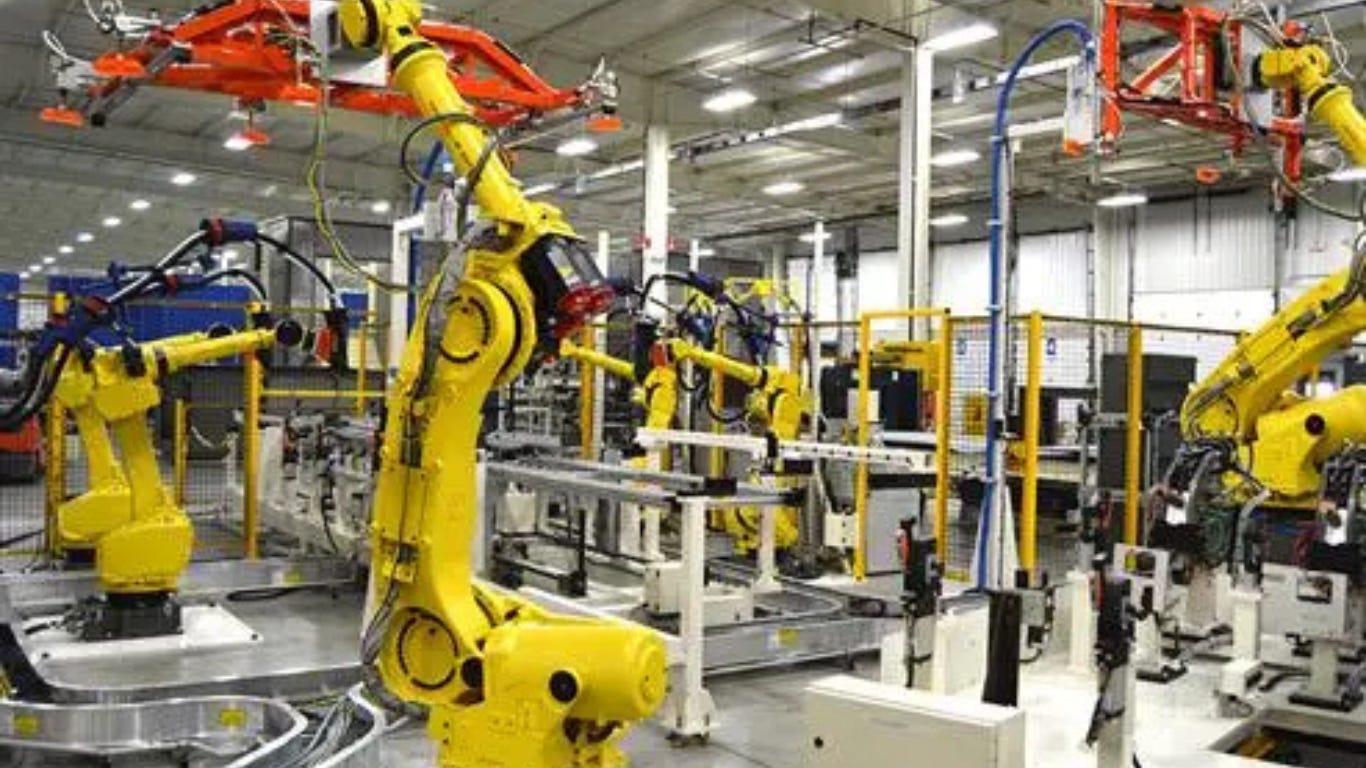
He told me that AI has been very effective in improving the performance of robotics and the machinery used to carry out complex logistical tasks—many of them tasks that human beings had already stopped doing long ago. But, interestingly, the company still does not have a precise statistical evaluation showing in hard numbers just how much better those systems now perform because of AI. The formal measurement of cost savings and productivity gains is clearly coming, but it has not fully arrived yet.
And that is where the story takes a revealing turn.
According to him, the clearest and most measurable impact of AI in his facility has not been in robotics, but in Human Resources. The department that has seen the greatest number of layoffs because of AI is HR. That fact is striking. It means that, in one of the most immediate and concrete ways, AI is not simply assisting human beings. It is replacing them.
AI is now sorting applications, screening candidates, qualifying prospects, and even conducting written or phone-based interviews with applicants. For now, most of these interviews are for entry-level jobs. Still, the speed of the displacement is startling.
The “common wisdom” was that AI would mostly affect manual, repetitive, low-skill work. Yet here it is moving first, and very aggressively, into administrative and relational roles once thought to require a distinctly human touch.
That is part of what makes AI so difficult to predict. It is not only changing work. It is scrambling our assumptions about which jobs are safe, which skills matter, and where human beings will remain indispensable. And that is precisely why ethical reflection can no longer remain an afterthought.
If AI is being deployed to eliminate jobs, it must also be used to prepare workers for the jobs that will emerge or be transformed. If corporations are serious about innovation, they cannot treat the workforce as collateral damage in a race for efficiency. Human beings are not transitional inconveniences on the road to higher productivity.
What disturbed me most in my friend’s account was his admission that his company, like many others, is implementing AI primarily as a revolutionary productivity tool, without serious reflection on the consequences for workers. That is not sustainable, and it is not morally serious. Something has to change.
A healthy perspective from a Catholic view is not only reasonable, but doable: technological progress cannot be judged only by what it makes faster, cheaper, or more efficient. It must also be judged by what it does to the human person. If AI is capable of producing exponentially more; then it should be capable of doing it without quietly discarding the people it was supposed to serve.