

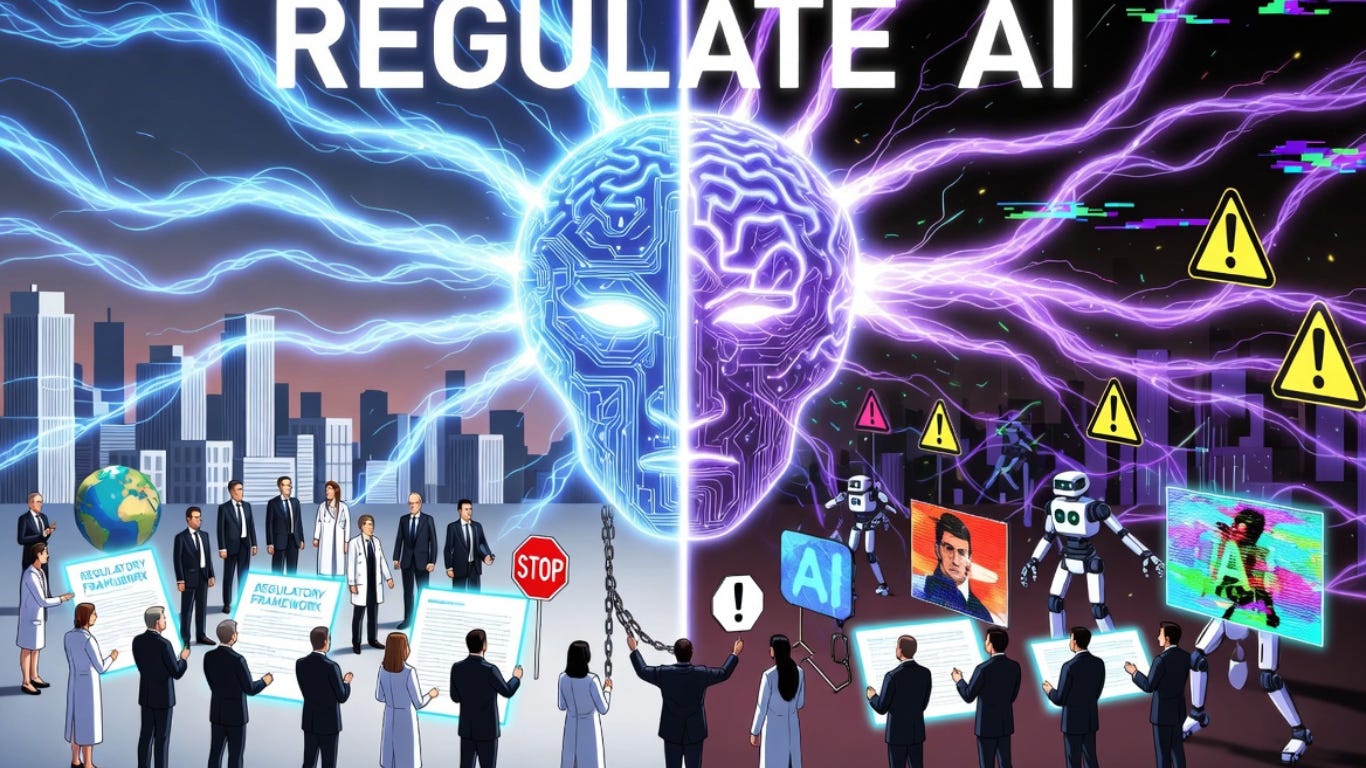
Although not explicitly Catholic, Michael Toscano’s basic argument could be quote well be adopted by Catholic concerned with where is AI going
His argument in an article in the New Atlantic that AI is not just another useful tool to be lightly supervised. It is part of a much larger technological project that tends to reorder family life, labor, culture, and even our understanding of the human person unless political authority pushes back. Drawing on Hannah Arendt’s critique of homo faber—man as fabricator and engineer—Toscano argues that modern society has grown accustomed to letting invention set the terms of life, and that AI now represents that tendency at full strength.
From there, his case for regulation is blunt: the state has both the right and the duty to say no, or at least not automatically yes, to technologies that threaten the common good. He points to earlier periods when political authorities restricted or redirected technologies to protect workers, families, or public order, and argues that modern governments have forgotten how to exercise that responsibility.
In his view, Big Tech will not restrain itself, because Silicon Valley is driven less by greed alone than by a deeper impulse to build whatever is “technically sweet” simply because it can be built.
The Catholic core of the argument is that technology must be subordinated to a human order, not the other way around. Toscano thinks strong regulation is necessary precisely because unchecked AI tends to treat human beings as raw material, replace human labor, and refashion relationships and institutions according to technological logic rather than moral ends.
Although I personally am less pessimistic, he makes a fair case, that is not merely prudential or economic. It is civilizational: if politics does not recover the courage to govern technology, then technology will go on governing us.