

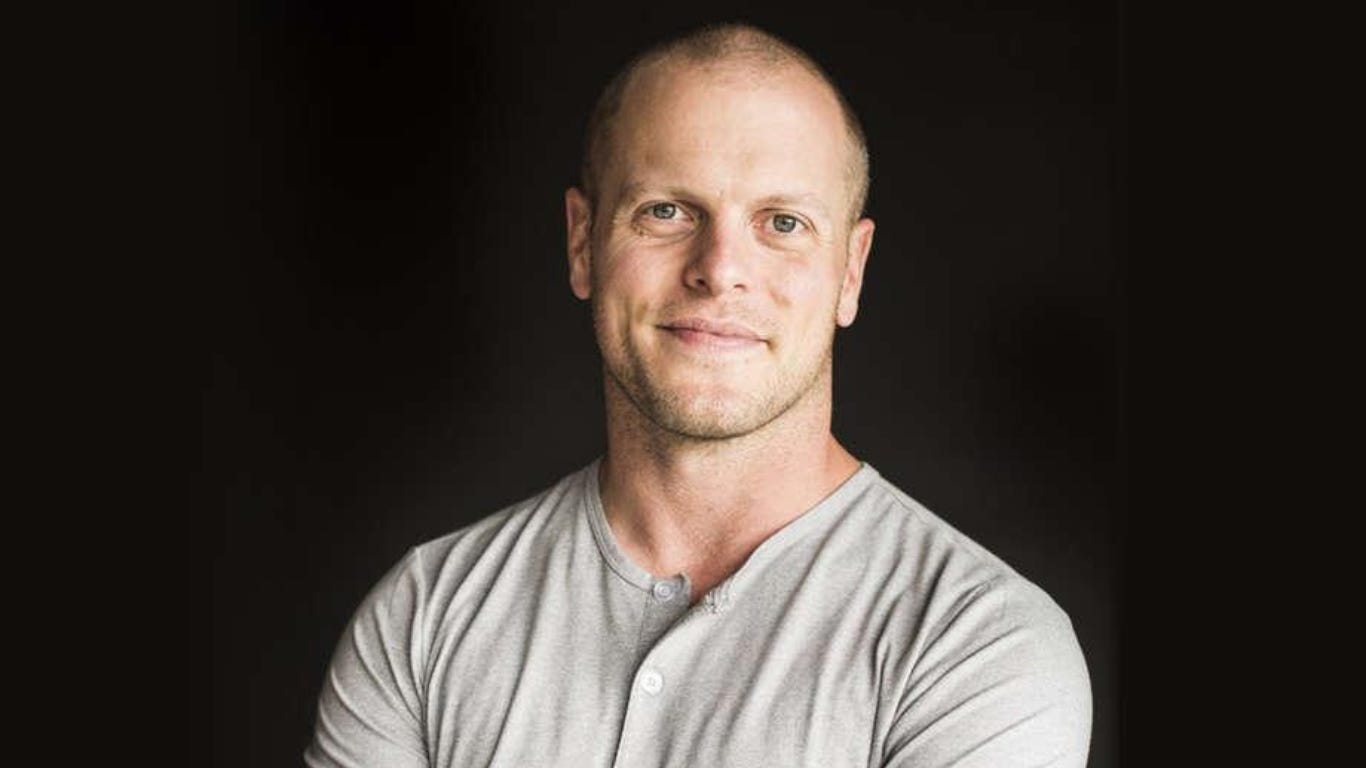
Tim Ferris
A recent, quite revealing essay from Tim Ferriss comes as quite a useful shock because it makes the AI challenge concrete. His claim is not abstract fear about what AI might someday do. It is that in at least one major corner of nonfiction—prescriptive, how-to writing—the disruption is already here.
He points to steep sales declines in adult nonfiction and especially self-help, and then to the far sharper collapse in his own catalog since the rise of ChatGPT and Claude. His explanation is brutally simple: if a book is functionally a decision tree or lookup table, millions of people will prefer a free chatbot that delivers personalized answers in seconds. Which brings me to my mantra argument: that is the power of convenience.
That is exactly why the essay matters from a Catholic perspective. It is not enough to repeat, however rightly, that the human person is not reducible to information, that wisdom is not identical with data, or that technology must serve the good. Those principles are indispensable. But Ferriss’s article reminds us that history does not stop for the sake of principle alone. Once a technology becomes cheaper, easier, faster, more personalized, and “good enough,” people reorganize their habits around it. They do not usually wait for philosophers or theologians to tell them how to proceed.
That means Catholics face two tasks at once. Some red lines are indeed clear. Cheating with AI is wrong. Deceiving others about authorship is wrong. Replacing real human relationships with artificial simulations is disordered. Treating the machine as if it were a person is confusion. Those lines are not hard to identify.
But Ferriss’s essay points us toward a more difficult terrain: many uses of AI will not fall neatly into obvious categories of sin or innocence. If a chatbot summarizes a book more efficiently than the book itself, is using it merely practical, or does it slowly deform attention?
If AI can extract the “actionable advice” from years of writing, does relying on it save time, or does it train the soul to reject the slower path by which understanding actually matures? Ferriss himself hints at this tension when he argues that bullet points did not transform his friends, whereas carefully sequenced books and real stories did.
That is why Catholic discernment will be indispensable. Not because the principles are vague, but because their application in a civilization shaped by convenience will often be hard. We are entering a world in which many practices will be efficient without being wise, permissible without being edifying, useful without being fully humanizing. The moral challenge will not always be to identify a bright red prohibition. Sometimes it will be to judge when convenience begins to flatten formation, when personalization begins to displace patience, and when “good enough” begins to hollow out the habits needed for truth, depth, and genuine transformation.
So the deeper lesson of Ferriss’s piece is this: AI’s danger is not only that it may cross obvious moral boundaries. It is that it may make many lesser decisions feel so frictionless, so rational, and so efficient that we stop asking what kind of people those decisions are making us. Catholics need more than slogans for that world. We need a richer moral imagination, a stronger ascetic realism about convenience, and a steadier willingness to distinguish between what can be used and what should be embraced. That work of discernment will be difficult. But it is precisely the kind of work the Church has always had to do whenever history presents a power that cannot simply be wished away.