

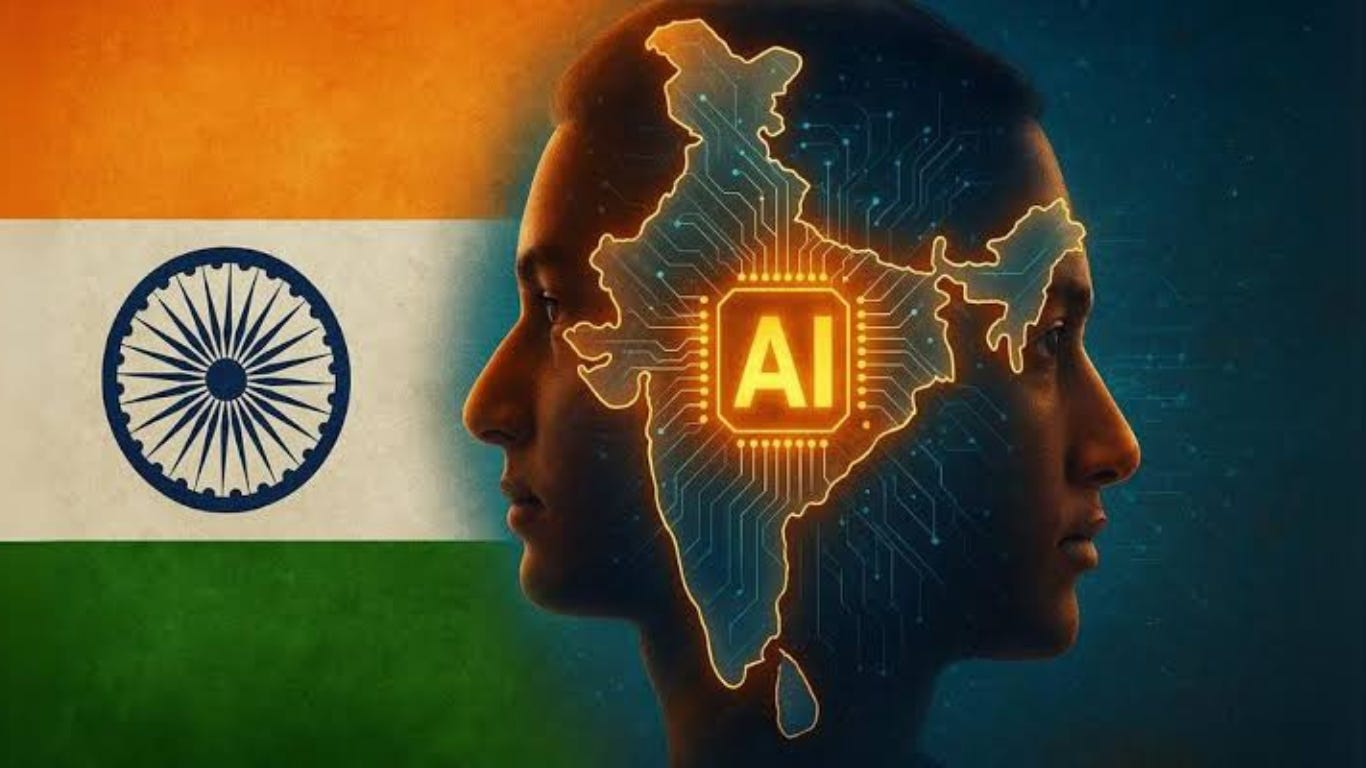
Fr. Kuruvilla Pandikattu, an Indian Jesuit priest, is right to say that artificial intelligence will test his country’s conscience. In a nation marked by enormous inequalities in education, infrastructure, access to capital, and social mobility, any powerful new technology will do exactly that. AI will not arrive in a vacuum. It will enter an already wounded social order, and in doing so it will expose much that was already broken.
That is why his analysis is fair, but his conclusion risks saying too much. AI will not “make or break” India. It will not decide the total future of the nation, any more than it will decide the total future of the world. That kind of language gives too much sovereignty to a tool. Nations are not saved or destroyed by technology alone. They are shaped by culture, institutions, families, education, religion, law, political courage, and the moral habits of their people.
Still, AI will have a significant impact, and perhaps a very great one. But its deepest significance may lie less in determining India’s future than in revealing India to itself. It is already making visible underlying injustices, structural deficiencies, and long-standing limitations in the economic and social order. Some of these may indeed be softened or even partly overcome by AI. Better access to information, translation, diagnosis, education, and administrative efficiency could genuinely help millions. But many deeper problems will not be solved by AI because they were never merely technical problems to begin with. No algorithm can substitute for justice, solidarity, trust, or political will.
In India, in parrticular, AI will not solve the utter unfairnes of social castes.
From a Catholic perspective, that distinction matters enormously. Technology can assist the human project, but it cannot replace it. It can expand human possibilities, but it cannot furnish the moral foundation on which a humane society rests. If AI is deployed into a social structure already marked by exclusion, corruption, or indifference, it may amplify those pathologies rather than heal them. If, on the other hand, it is guided by a real concern for the poor, for workers, for families, and for the dignity of the person, then it may become one useful instrument among many in the service of the common good.
That is why the true test is not so much how India embraces AI, but whether India has the wisdom to confront what AI is revealing. A country does not become just because it becomes technologically advanced. It becomes more just when it addresses the human realities that technology alone cannot repair. The same is true everywhere else.
AI is not destiny. It is an accelerant. It can sharpen both virtue and vice, justice and injustice, inclusion and exclusion. If we want an AI revolution that genuinely favors and enhances humanity, then we will need much more than innovation. We will need moral clarity, institutional seriousness, and the courage to repair the older fractures that the new machine is bringing into the light.