

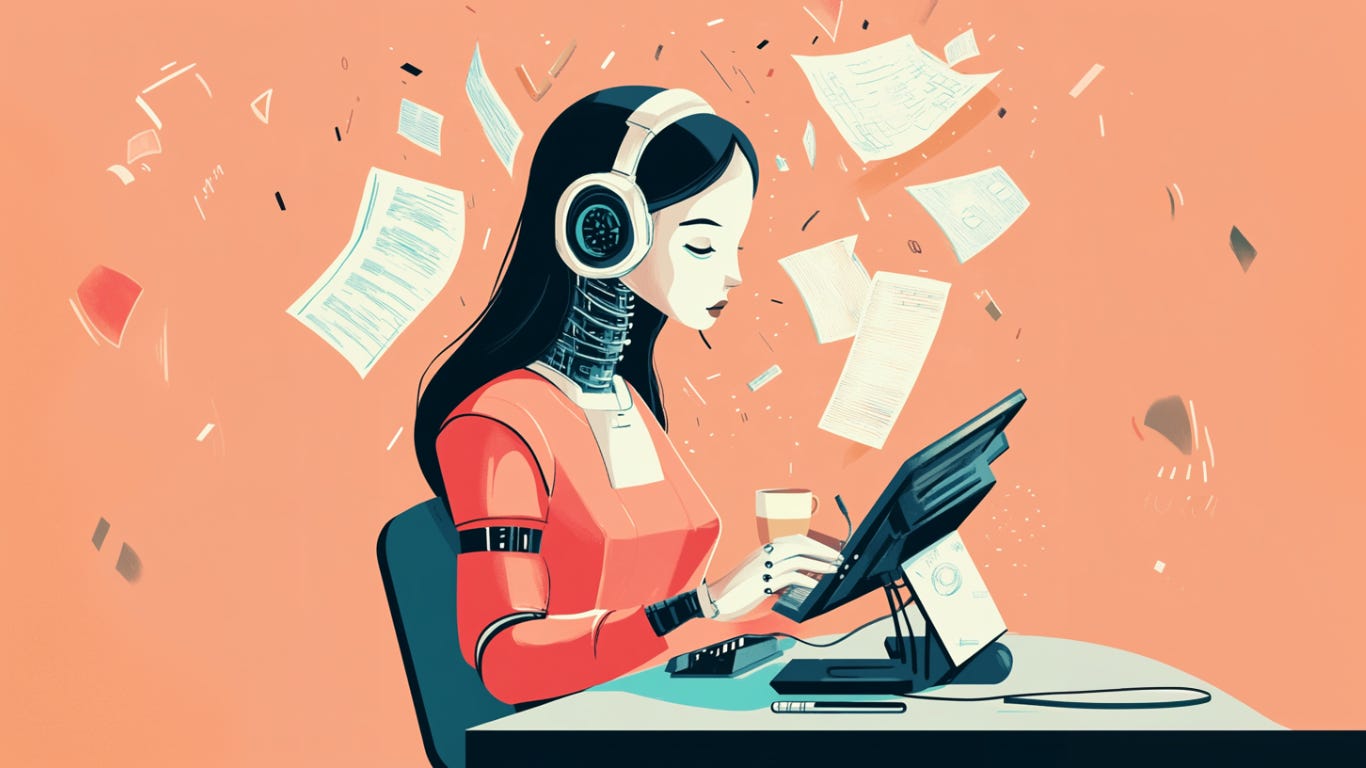
In the latest post on his Substack newsletter, Richard Hanania, President of the Center for the Study of Partisanship and Ideology, stages a funny vanity test and half-turns it into comedy: can AI already write like me?
But what makes it unsettling is that the answer is not an obvious no. In his experiment, readers often struggled to distinguish his writing from AI-generated imitations, and in one case Claude came surprisingly close to fooling them. His conclusion is not that human writers disappear tomorrow, but that the old confidence that style, voice, and recognizable intelligence are uniquely ours is already being shaken.
That is where the post becomes more than amusing. Hanania argues that AI is getting good enough that many people can effectively outsource writing, that detection may become an arms race, and that in the future writing ability may no longer function as a reliable signal that someone is worth listening to.
He even suggests that credentials and preexisting reputation may matter more once original authorship can no longer be taken for granted. That is not just a clever internet problem. It is a cultural problem. It means one of the classic ways human beings have shown seriousness of mind—by wrestling thought into words—may lose part of its public meaning.
From a Catholic perspective, the funny part and the scary part are bound together. It is funny because AI exposes how much of what we call “voice” can be mimicked, stylized, and statistically reproduced. But it is scary because writing was never only about output.
Writing is a discipline of thought, an act of self-ordering, a way the person comes to know what he actually believes. If AI turns writing into something one merely commissions from a machine, then even excellent prose may conceal a thinner soul behind it. The danger is not only fake authorship. It is the weakening of the inner labor by which human beings seek truth.
And yet the Christian response should not be panic. Hanania himself notes something important: even in a world saturated with AI writing, readers will still want human beings. He thinks writing remains, at least in part, a parasocial relationship, and that as society grows wealthier, people will continue to prefer contact with minds like their own.
That instinct is more profound than he perhaps realizes. We are not only consumers of information. We are persons made for communion. We do not merely want correct sentences. We want to encounter someone through them.
So the Catholic takeaway is not that AI will eliminate writers, nor that it leaves writing untouched. It is that it may force us to recover what writing is actually for. If writing is merely the efficient packaging of ideas, then machines will do more and more of it. But if writing is also a human act of judgment, witness, struggle, and self-gift, then the machine can imitate much without replacing the thing itself.
That is why Hanania’s post is both hilarious and sobering. It shows that AI can mimic more of us than we expected. It also reminds us, perhaps against his own intention, that the truly human part of writing was never just style. It was the person behind it.